
Cable assembly pricing can look like a black box from the outside — two seemingly similar cables can be quoted at very different prices. Here’s what actually drives the cost of a custom micro coaxial cable assembly, so you can understand where a quote is coming from.
1. Connector Type and Availability
Standard, widely-stocked connectors (common I-PEX, Hirose, or JAE part numbers) are generally the lowest-cost option since no special sourcing or tooling is required. Custom or less common connectors add cost both for the component itself and for any special termination tooling needed.
2. Cable Gauge and Construction
Finer AWG gauges (44, 46) require more careful, slower termination processes than thicker gauges, which increases labor cost per unit. Multi-conductor or shielded constructions also add material and processing cost compared to a simple single-conductor cable.
3. Length and Tolerance
Very short cables can actually cost more per unit than mid-length cables, since fixed processing steps (stripping, termination, testing) are spread across less cable. Tight length tolerances also require more careful cutting and quality control.
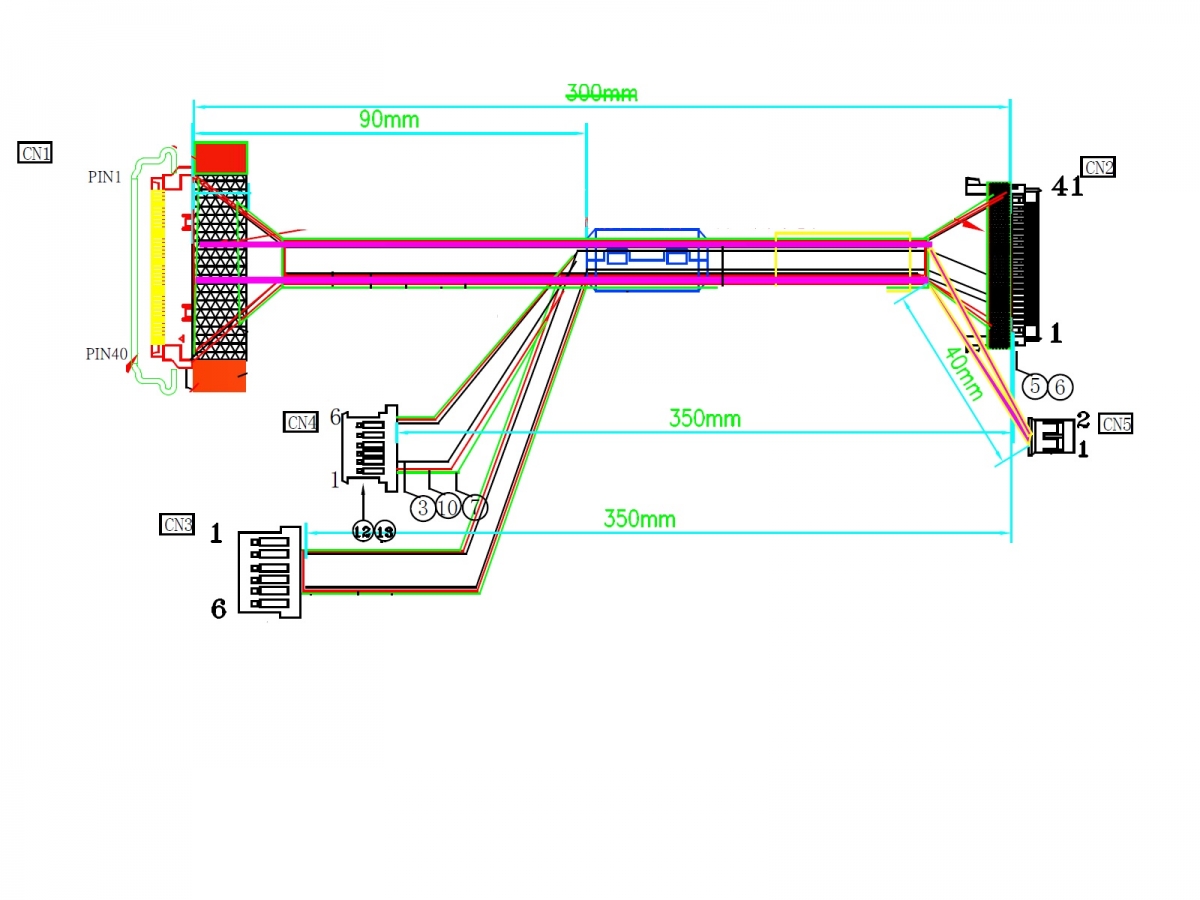
Custom LVDS Cable Assemblies Manufacturer
4. Testing Requirements
Basic continuity testing is usually included in standard pricing. Additional testing — impedance testing, VSWR testing, or 100% electrical testing with documented reports — adds cost proportional to the testing time and equipment required, and this cost doesn’t scale down much at low volumes.
5. Overmolding and Strain Relief
Cables requiring overmolded connectors or custom strain relief need mold tooling (a one-time cost, typically amortized across the order) plus additional processing time per unit.
6. Order Volume
Fixed costs — tooling, test fixture setup, first-article inspection — are spread across the total order quantity. This is why per-unit price typically drops significantly between prototype quantities and production volumes, even when nothing about the cable design changes.
7. Certification and Documentation
Orders requiring formal quality documentation (material certificates, test reports, ISO 13485 traceability) involve additional administrative and QC time, which is reflected in the quoted price.
Getting an Accurate Quote
The more specific your drawing and requirements are upfront, the more accurate — and often lower — your quote will be, since the manufacturer isn’t pricing in uncertainty. Providing connector part numbers, AWG, length, testing requirements, and target volume in your first RFQ typically gets you a firm quote faster than an open-ended request.
Send us your specifications and we’ll break down the quote by these factors so you can see exactly where the cost comes from.